From wind energy to living space
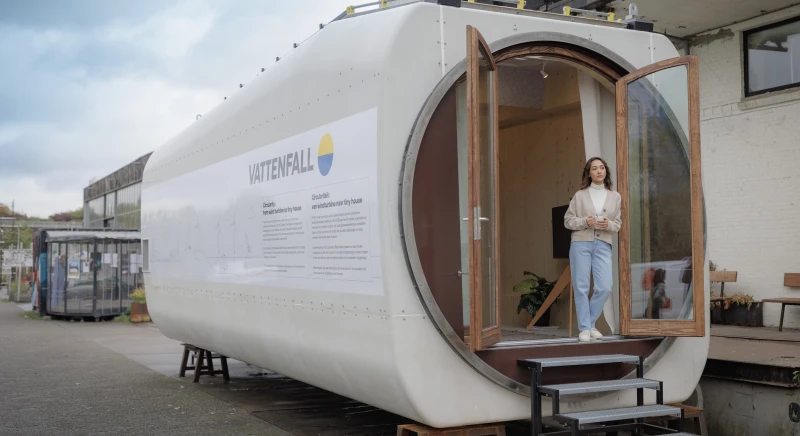
A wind turbine has an operational lifespan of around thirty years, but its components are far from reaching the end of their useful life. Vattenfall wanted to explore how these high-quality materials could be reused. In the Co/Lab: Upcycled Turbines, Dutch Design Foundation (DDF) brought the energy company together with four design studios.
- 4 design studios
- Brought different perspectives on reuse
- Approx. 25 m²
- Living space in the built tiny house prototype
- 2 rotor blades, 33 metres long
- Connected and tested as a floating platform
Vattenfall’s technical expertise was already well established at the start of the project. The search therefore focused primarily on designers who could come up with applications that might be less conventional within the energy sector. Dutch Design Foundation (DDF) selected studios with a range of different approaches. Vattenfall then chose four participants, one more than originally planned.
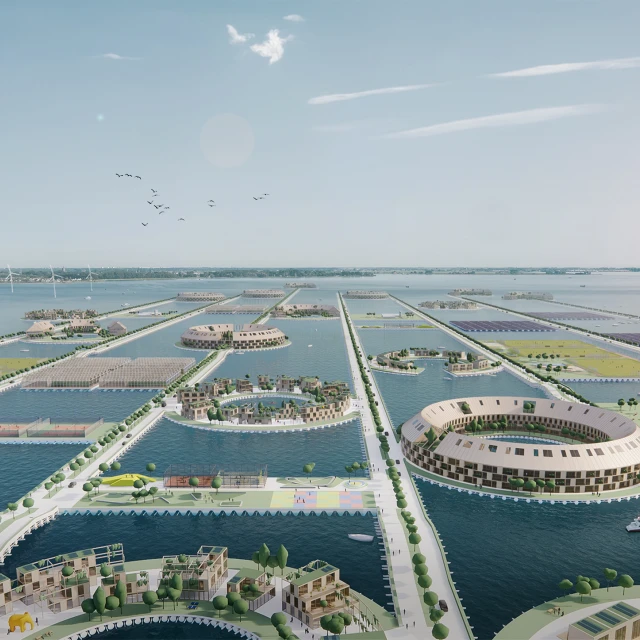
Design studios Superuse and cepezed explored new functions for components of wind turbines. Studio Carbon developed a vision for the future, along with a toolkit for working towards it step by step. Interactivist translated the life cycle of turbines into data paintings, which have since also been acquired by Vattenfall. On behalf of DDF, Lab Manager Justine Kontou kept the collaboration on track, brought Vattenfall’s information needs to the table and helped bridge the gap when engineers and designers did not immediately understand each other.
Superuse saw that the nacelle - the housing at the top of the turbine - could also be used as a home. As part of their design process, they explored what would be needed to provide sufficient daylight and improve insulation, among other things, if a nacelle were to be converted into a fully functional tiny house, including a kitchen and bathroom.
At Vattenfall’s request, sister company Blade-Made built the prototype for Dutch Design Week 2024. Visitors could experience for themselves what it feels like to inhabit a turbine component that had been transformed into a tiny house.
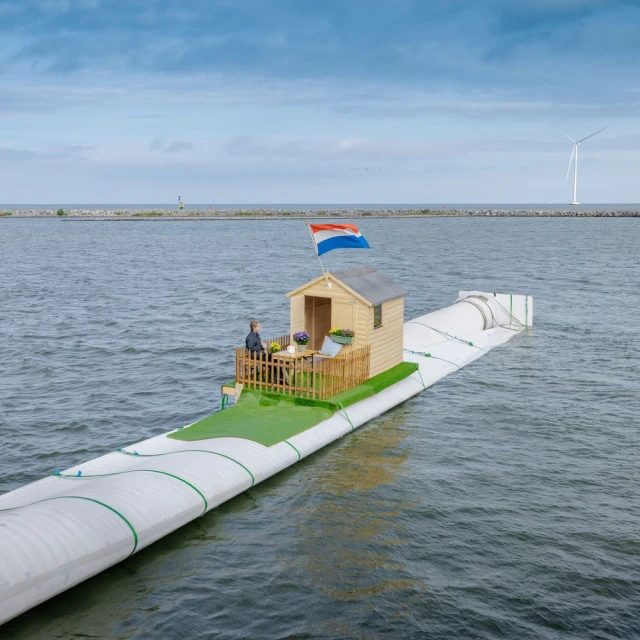
cepezed also brought its design into practice: two rotor blades were connected to form a floating platform. This made reuse tangible at full scale and opened up a potential new application for wind turbine components on the water. Further development is needed before the concept can be implemented on a larger scale.
“With this Co/Lab, we wanted to approach problem-solving differently from the usual way of working within our technical teams. It inspired me in ways I could never have anticipated.”
 Thomas Hjort, Vattenfall
Circular thinking starts with asking the right questions
Do you have a challenge around materials, energy or sustainability that’s stuck?
Plan a conversation